OpenSource#
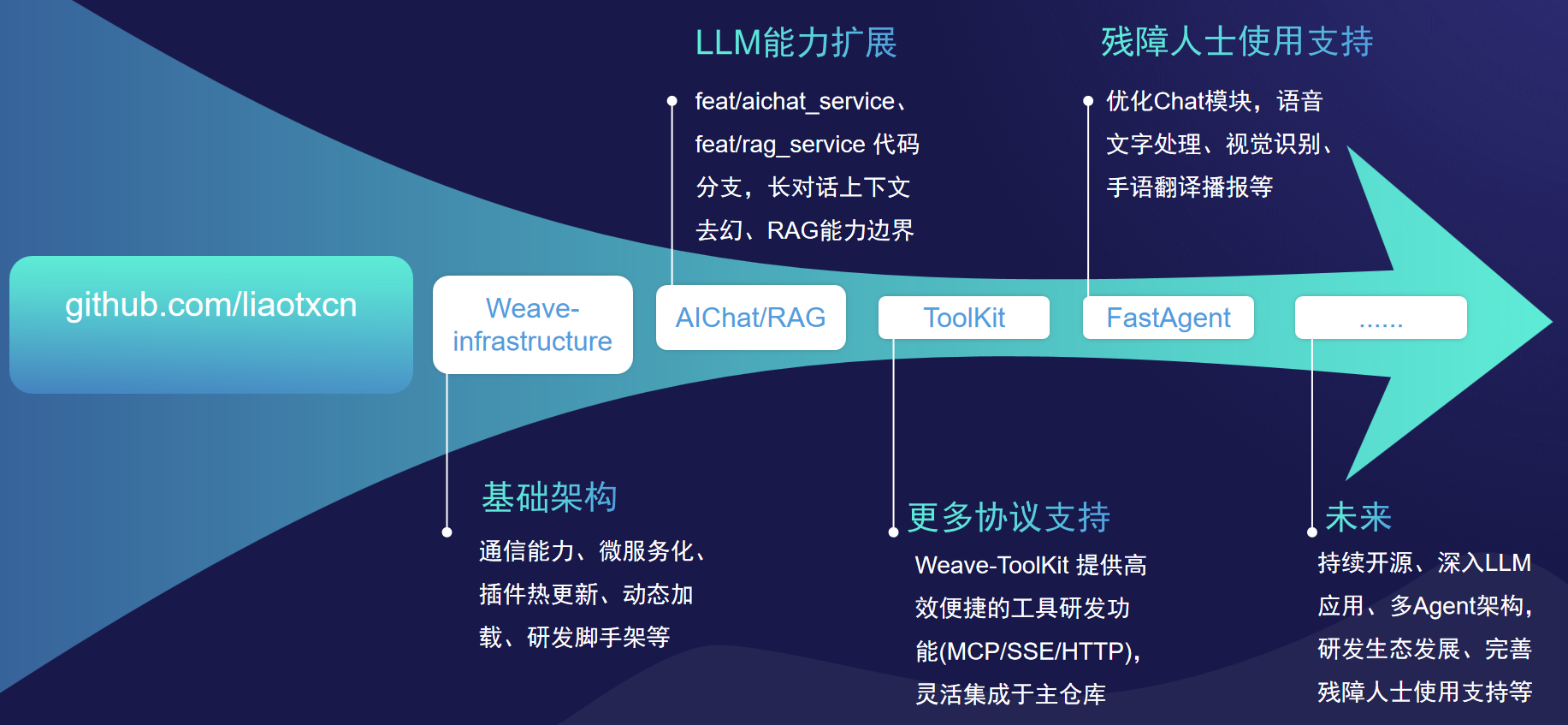
Weave Open Source Architecture Practice#
- In the Weave feat/aichat_service branch, we introduced dialogue display support for Deaf-mute and other disabled users, enabling text and voice content to be converted into sign language to facilitate usage for disabled individuals
- In the future, we will continue to open source, iterate, and optimize
The Ideal and Reality of Technological Democratization#
In the technology field, “open source” is no longer an unfamiliar term. From the Linux kernel to the application development ecosystem, from TensorFlow to VS Code, open source software forms the cornerstone of the modern digital world. But is open source merely a software development model, or does it carry deeper social significance? Let’s explore a potentially underestimated perspective: the intrinsic connection between the open source movement and the principles of equal rights.
The Core of Open Source: Equality of Opportunity#
- Near-zero cost access — Anyone with an internet connection can download, use, and learn the most cutting-edge software technologies
- Non-discriminatory — Engineers and students see the exact same source code
- No identity presupposition — Your code speaks for itself
This constitutes the most fundamental layer of equal rights: equality of opportunity. It doesn’t guarantee everyone achieves the same results, but it does ensure everyone starts from the same place.
The Deeper Layer of Open Source: Voice and Agency#
- Identify a problem → Submit an Issue: Point out the problem
- Need a feature → Submit a PR: Implement it yourself
- Have a development direction → Fork: Evolve the functionality
As Developers, What Can We Do?#
Principles practiced in every commit, every review, and every email:
Technology can also be gentle To make code a shared tool and common wisdom of humanity
- A student can run and modify the same code written by their idol—a Google engineer—and that is equal rights
- A PR submitted by a developer in Argentina is judged unconditionally on technical merit rather than passport or visa—that is equal rights
- A visually impaired person can browse the web just like anyone else through open source accessibility tools—that is also equal rights
Open source never promised to create a perfectly equal world, but it provides the institutional design closest to a “fair starting point” in the technology domain. Within this system, code is equal, tools are free, and the barrier to participation is something every one of us can work to continuously lower.